Bacteriostatic water: what it is, sizes, where to buy it for a laboratory
Bacteriostatic water is sterile water USP containing 0.9 % benzyl alcohol as a preservative, supplied in sealed glass vials of 3, 10 or 30 mL and used in laboratories as a solvent for lyophilized compounds. The preservative keeps microbes from multiplying in an opened vial, which is the only difference from plain sterile water; it is bought from laboratory-supply and research-reagent suppliers, in sealed, lot-numbered vials.
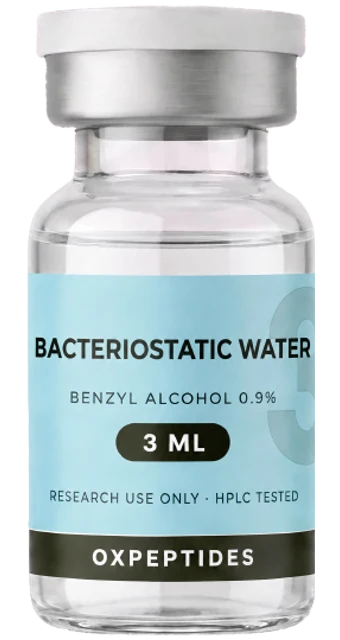
In the catalog
Bacteriostatic Water
| Size | Price | Per unit |
|---|---|---|
| 3 mL | $8 | $2.67 / mL |
Research use only. Not for human or veterinary use. One email when the first batch is listed. No newsletter.
What is bacteriostatic water?
Bacteriostatic water is water that has been sterilized and to which 0.9 % benzyl alcohol (9 mg per mL) has been added as a preservative. "Bacteriostatic" describes what the benzyl alcohol does: it stops bacteria from multiplying inside the vial. It does not sterilize anything on contact — the water is sterile because it was filled that way, and the preservative keeps it that way in an opened vial.
The United States Pharmacopeia (USP) describes this category of water; a vial that says "USP" on its label is stating that it was prepared to that monograph. Nothing else is in the vial: no salts, no buffer, no dextrose. The pH is typically between 4.5 and 7.0.
In a laboratory it is the standard solvent for lyophilized compounds — the powder in the peptide vials of this catalog. It is sold and described here as a laboratory supply only. Research use only. Not for human or veterinary use.
Bacteriostatic water vs sterile water
The two are often confused because both are clear, sterile and sold in similar vials. The difference is the preservative.
| Sterile water | Bacteriostatic water | |
|---|---|---|
| Preservative | None | 0.9 % benzyl alcohol |
| Typical sizes | 5, 10, 20 mL and larger | 3, 10, 30 mL |
| Label wording | "Sterile Water", USP | "Bacteriostatic Water", USP, "0.9 % benzyl alcohol" |
| Storage | Room temperature | Room temperature, protected from light |
Bacteriostatic water for peptides: why it ships with the vials
"Bacteriostatic water for peptides" and "bac water" are the names laboratories give the same product when they order it alongside lyophilized peptides. Nothing changes in the vial: it is the sterile, preserved water described above. What changes is the lot discipline around it — a research supplier lists it with the same label requirements as its reagents (concentration, lot, expiry) and ships it in the same parcel, so the solvent and the powders it accompanies arrive together, from the same source.
The catalog lists it next to every lyophilized compound for that reason. See bacteriostatic water in the catalog.
Sizes: 3 mL, 10 mL, 30 mL
Three sizes cover the market. The right one is a question of how many vials of powder a laboratory works through, not of price per milliliter.
- 3 mL — the size sold in this catalog. One small vial, one lot. See bacteriostatic water in the catalog.
- 10 mL — the traditional laboratory size, a glass vial with a rubber stopper and crimp cap.
- 30 mL — the size behind the "bacteriostatic water 30ml" search. Made by a small number of manufacturers and periodically out of stock across the whole market, which is why the search volume for it is high.
Whatever the size, the label must carry the concentration of benzyl alcohol, a lot number and an expiry date. A bottle with no lot number is not a laboratory supply.
What to check before buying
Bacteriostatic water is inexpensive, and that is exactly why the market is full of unlabeled or re-bottled vials. Five checks:
- The label says "0.9 % benzyl alcohol" and "USP". If the concentration is missing, so is the guarantee.
- Sealed crimp cap, intact septum. A vial that arrives with the aluminum seal removed or a punctured septum is not sterile.
- Lot number and expiry date printed, not hand-written.
- Clear, particle-free liquid. Cloudiness, floating particles or a yellow tint mean the vial goes in the bin.
- A supplier that sells it as a laboratory supply, with the same lot discipline as its reagents — not a marketplace seller with a stock photo.
The same rules apply to every product in the catalog; they are laid out in where to buy research peptides in the US.
"Bacteriostatic water near me": local retail vs online
Local retail rarely stocks bacteriostatic water for walk-in customers, and when it does it is the 30 mL size at a hospital-supply price. Online laboratory suppliers are where the 3 and 10 mL vials are, shipped in a few days with the lot number visible on the listing.
Two things a local purchase does not give you and a research supplier does: the vial ships with the peptides it is meant to accompany, in the same parcel and under the same lot discipline, and the listing tells you the manufacturer and the concentration before you pay.
Storage of the sealed vial
Bacteriostatic water is one of the few items in a research order that does not go in the freezer.
- Temperature: 15–25 °C (room temperature). Do not freeze; ice can crack the glass and freezing alters the preservative's distribution.
- Light: keep the vial in its box. Benzyl alcohol is light-sensitive over long periods.
- Shelf life: 24 months for a sealed vial. The expiry date is printed on the label.
The storage rules for the powders it accompanies are different — cold, dark, dry — and are described in lyophilized peptides: storage and shelf life.
Price: what the catalog offers
Bacteriostatic water is a low-cost item; the price on the listing matters less than the label on the vial. The catalog sells a 3 mL sealed vial, USP, 0.9 % benzyl alcohol, with a printed lot number and expiry date. The live table at the top of this page shows the current price.
FAQ
Where can I buy bacteriostatic water?
What is the difference between bacteriostatic water and sterile water?
Is bacteriostatic water 30 mL available?
How is bacteriostatic water stored?
What should the label of bacteriostatic water say?
Related guides
Lyophilized peptides: storage and shelf life
What lyophilization is, the four things that degrade a peptide, storage temperature and shelf life.
Read Buying guideWhere to buy research peptides (US)
Eight checks that separate a supplier from a reseller, a comparison table, and the catalog guides.
Read Buying guideGHK-Cu — buying guide
Composition, the blue-violet powder, vial sizes, what a batch COA must show, storage.
ReadNext step
Bacteriostatic Water in the OXpeptides catalog
The first batch is in preparation. One email when it is listed — sizes, price per vial and the batch COA are on the product page.
Research use only. Not for human or veterinary use.