BPC-157 (pentadecapeptide): what it is, how it is supplied, and how to choose a research supplier
BPC-157 is a synthetic 15-amino-acid peptide (sequence GEPPPGKPADDAGLV, about 1,419 Da) supplied as a white lyophilized powder, usually as the acetate salt, in sealed glass vials of 10, 20 or 30 mg for laboratory research. Research-grade BPC-157 is bought from a supplier that publishes a batch-specific certificate of analysis (HPLC purity and mass confirmation) from an independent laboratory, ships domestically, and sells it strictly as a reagent.
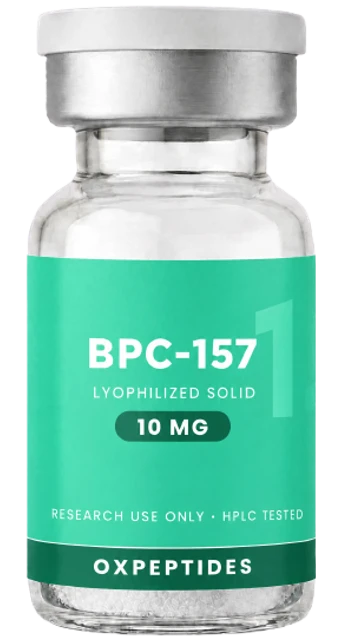
In the catalog
BPC-157purity >99% by HPLC — measured value on each lot's COA
| Size | Price | Per unit |
|---|---|---|
| 10 mg | $50 | $5 / mg |
| 20 mg | $80 | $4 / mg |
| 30 mg | $114 | $3.80 / mg |
Research use only. Not for human or veterinary use. One email when the first batch is listed. No newsletter.
What BPC-157 is
BPC-157 is a synthetic peptide of fifteen amino acids — Gly-Glu-Pro-Pro-Pro-Gly-Lys-Pro-Ala-Asp-Asp-Ala-Gly-Leu-Val (GEPPPGKPADDAGLV) — with a molecular weight of about 1,419 Da. The name stands for "Body Protection Compound" and the number is a fragment index: the sequence was originally identified as part of a larger protein and has been made by chemical synthesis ever since. The group of Predrag Sikirić in Zagreb has published on it since the early 1990s.
Three details identify the reagent on a bench:
- The sequence. Fifteen residues, three consecutive prolines near the N-terminus. A supplier that cannot state the sequence is selling a name, not a compound.
- The mass. Mass spectrometry on the COA confirms a peak at the expected molecular weight (about 1,419 Da for the free peptide).
- The salt form. Synthetic BPC-157 is isolated as the acetate salt; the powder is white and odorless.
Two variants exist in the market: BPC-157 acetate (the standard research material) and BPC-157 arginate, a different salt form. The catalog sells the acetate. In the catalog, BPC-157 is a research reagent: a sealed vial of lyophilized powder with a lot number and a certificate of analysis. Research use only. Not for human or veterinary use.
"BPC-157" on Google vs BPC-157 as a reagent
Search listings for BPC-157 mix research suppliers with consumer brands, clinics and forum threads. Only one of those sells the object a laboratory orders, and it can be recognized by a short list of properties.
| What to check | Consumer / reseller listing | Research reagent |
|---|---|---|
| Form | Tablet, mixed formula, or unmarked vial | Lyophilized powder, single compound |
| Identity | "BPC-157" with no sequence or salt stated | GEPPPGKPADDAGLV acetate, mass confirmed |
| Quantity | Vague, or "per serving" | Net mg on the label (10, 20, 30 mg) |
| Purity documentation | "Pharmaceutical grade" as text | HPLC chromatogram with a measured percentage |
| Lot traceability | None | Lot number on the vial, same lot on the COA |
| Storage on arrival | Shelf | Freezer, protected from light and moisture |
A listing with no sequence, no mg quantity and no verifiable COA is a reseller or a consumer product — not a research supply.
How BPC-157 is supplied: sizes and what is in the vial
Research BPC-157 comes as a white lyophilized (freeze-dried) powder in a glass vial closed with a rubber septum and an aluminum crimp cap. The label states the compound, the net quantity in milligrams, the lot number and the words "research use only".
The catalog offers three sizes — 10 mg, 20 mg and 30 mg — and the price per milligram is listed for each. The live table at the top of this page is read directly from the catalog, so the prices shown there are the prices in force today. See BPC-157 in the catalog for availability.
What "10 mg" means on the label
The number is the net mass of BPC-157 powder filled into the vial, and it is the quantity the certificate of analysis refers to. Ten milligrams of lyophilized peptide is a thin white cake at the bottom of a 3 mL vial. The vial is over-sized on purpose; that is not a short fill.
Purity and peptide content are two numbers
Because the powder is an acetate salt with some bound water, the mass of pure peptide is lower than the mass of powder. A careful COA reports HPLC purity (how clean the peptide is) and, when tested, peptide content (how much of the powder is peptide). A supplier quoting "99 %" without saying which of the two it is has not read its own certificate. See HPLC purity: what "> 99 %" means.
What the certificate of analysis must show
For BPC-157 a usable certificate carries:
- The laboratory's name and a verifiable identifier. Independent labs (Janoshik is the reference for this market) give each test a number that anyone can look up on the lab's site. A PDF that cannot be looked up is not a certificate.
- The lot number — identical to the lot number printed on the vial you receive.
- HPLC purity as a measured percentage with the chromatogram. For a 15-residue peptide, the trace should show one dominant peak; a cluster of nearby peaks points to deletion sequences from the synthesis.
- Mass confirmation by mass spectrometry at the expected molecular weight.
- The date of the test. A certificate several months old describes a lot that has probably sold through.
- A photograph of the tested vial wearing the supplier's own label. A COA showing a bare vial was issued to the manufacturer and says nothing about what this supplier bottled.
The full checklist, with examples of what a doctored certificate looks like, is in how to read a peptide COA.
Storage of the sealed vial
BPC-157 is stable as a lyophilized powder when it is kept cold, dark and dry. The catalog's storage line for the sealed vial:
- Temperature: −20 °C for long-term storage; a refrigerator (2–8 °C) is acceptable for short periods.
- Light: keep the vial in its box or in an opaque container.
- Moisture: the powder is hygroscopic. Let a cold vial reach room temperature before removing it from its bag, so no condensation forms on the glass.
- Shelf life: 24 months from the fill date for a sealed vial stored as above.
Shipping at ambient temperature for a few days does not degrade the sealed powder; that is why research peptides ship without cold packs. The general rules, size by size, are in lyophilized peptides: storage and shelf life.
How to choose a BPC-157 supplier in the United States
"BPC-157 for sale" returns more resellers than any other peptide query, because the compound is cheap to synthesize and easy to relabel. To sort them, ask six questions of the product page — not of the marketing.
- Is there a batch COA from a named independent lab, and can it be verified on the lab's site? No verifiable COA = no purchase.
- Does the COA show the supplier's own label? A manufacturer's certificate, re-used by a reseller, does not cover what was re-bottled or re-labeled.
- Is the salt form stated (acetate) and the quantity given in mg, with a lot number on the vial?
- Does the supplier ship domestically, from US stock, in a few days? Long international transit is where vials get lost, heated or seized.
- Does the page describe the product only — composition, purity, storage — with "research use only" stated plainly? A supplier that publishes usage content is a supplier that is easy to shut down; that risk transfers to the buyer whose order is in transit.
- Is the price at or above the market, not far below it? Third-party testing costs several hundred dollars per lot. A price far under the market is a price that did not pay for testing.
The wider checklist — payment, packaging, what to do if a parcel is stopped — is in where to buy research peptides in the US.
BPC-157 and TB-500
The two are often searched together but are unrelated molecules: TB-500 is a seven-residue fragment of thymosin β4, sold in the same 10/20/30 mg sizes. Its own guide is the TB-500 buying guide.
Price: what the catalog offers
The price of research BPC-157 depends on three things: the size of the vial, whether a third-party test was paid for the lot, and where it ships from. It is one of the least expensive peptides to synthesize, which is exactly why the market is full of untested lots sold far below cost of testing. The catalog table at the top of this page shows the current price per vial and per milligram for each size.
What the price includes at OXpeptides: a sealed, labeled vial from a tested lot, the batch COA, tracked domestic shipping, and a replacement if a parcel arrives damaged. What it never includes: anything other than the reagent itself.
Published research
The publications a researcher will find when looking this compound up, with their DOI. They characterize the molecule and the models it was studied in; they are listed as references, not as claims about this product.
Sikiric P, et al. (2018). Current Pharmaceutical Design, 24(18), 4012-4032.
doi:10.2174/1381612824666181112094255
The review from the group that first described the peptide: its origin as a fragment of a larger protein, its sequence, its stability in acidic solution, and the models in which it has been characterized.
FAQ
Where can I buy BPC-157 for research?
What does research-grade BPC-157 cost?
What is the sequence and molecular weight of BPC-157?
How is BPC-157 stored before opening?
What is the difference between BPC-157 acetate and arginate?
Related guides
TB-500 — buying guide
What the trade name covers, the white powder, vial sizes, what a batch COA must show, storage.
Read Quality & storagePurity: what "99 %" HPLC means
What the HPLC measures, why 99 % is not 99 mg in a 100 mg vial, why a percentage needs a chromatogram.
Read Buying guideWhere to buy research peptides (US)
Eight checks that separate a supplier from a reseller, a comparison table, and the catalog guides.
ReadNext step
BPC-157 in the OXpeptides catalog
The first batch is in preparation. One email when it is listed — sizes, price per vial and the batch COA are on the product page.
Research use only. Not for human or veterinary use.